
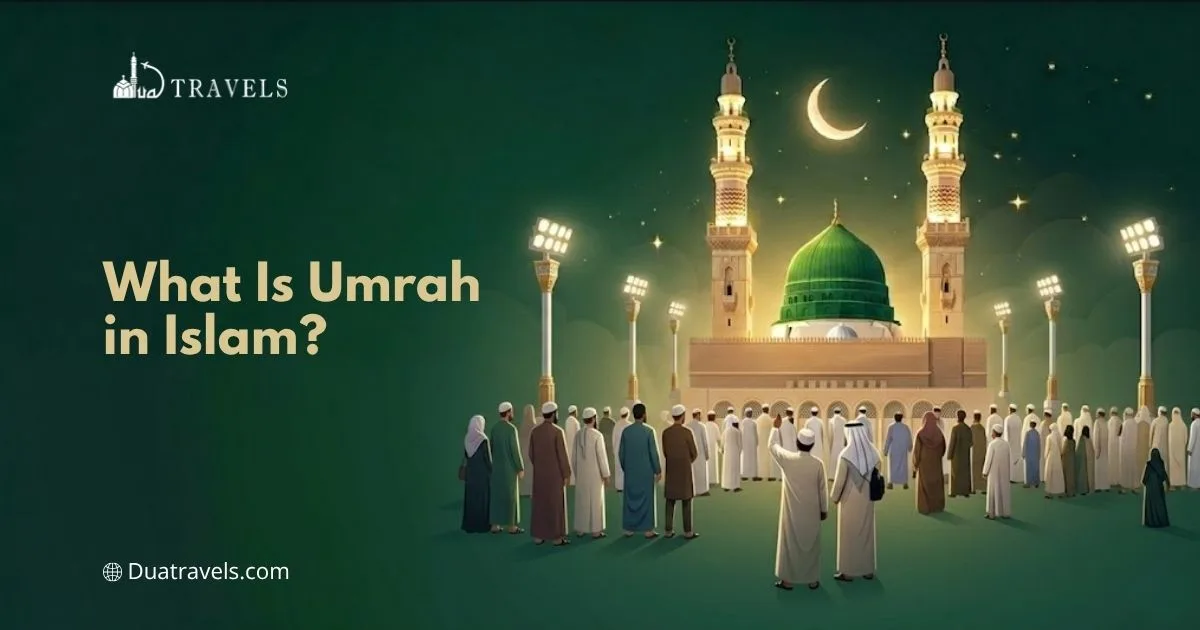
Umrah is a holy visit to Makkah, also named as “the lesser pilgrimage”, which Muslims can perform at any time of the year, and is a very significant spiritual journey. Although it has some similarities to Hajj, the annual or large pilgrimage, which is one of the Five Pillars of Islam, Umrah is voluntary, less time-consuming and focuses on personal renewal, repentance and closeness to Allah. It is a sacred journey that has been celebrated for centuries and is immersed in prophetic tradition, offering a chance for travelers to take a gap from their hectic routines, and feel a deep sense of connection with the Almighty Allah SWT. However, for first-time travelers, the procedure may be complicated but with the help of Dua Travels USA you can experience a journey full of convenience and peace. From understanding the rituals and dress code to arranging traveling from the U.S., knowing what to expect is essential for a peaceful experience.
Explore everything you should know about Umrah and its spiritual meaning, rituals, practical travelling tips and answers to some common questions. This informative blog will help you approach your sacred journey with peace, confidence and an open heart, whether you are traveling alone or with family.
Umrah at a Glance: The "Lesser Pilgrimage”
The "Lesser Pilgrimage" is known as Umrah. Umrah (Arabic: عُمْرَة) is a spiritual trip to the Holy City of Makkah and Madinah in Saudi Arabia, that is performed voluntarily. This sacred practice can be availed at any time of the year (as opposed to the fixed dates for Hajj). Umrah is not mandatory but it is considered to be a highly spiritual experience and Muslims all over the world value it greatly.
Feature | Umrah | Hajj |
Obligation | Voluntary (Sunnah/Mustahabb) | Obligatory once in a lifetime (for those able) |
Timing | Any time of year | Specific days: 8th–13th of Dhul Hijjah |
Duration | A few hours to 2–3 days | 5–6 days minimum |
Rituals | Simpler, focused on Tawaf and Sa'i | More complex, includes standing at Arafat |
Spiritual Reward | Forgiveness, renewal, closeness to Allah | Completion of a pillar of Islam, profound transformation |
The Five Essential Steps of Umrah
It is a journey of the heart to perform Umrah, but knowing the steps makes it easier for the travelers to practice the rituals with authenticity. The following is a clear guide for first-time performers from the U.S. to experience the best of their journey by following the right steps.
1. Ihram
The time is before crossing the Miqat (set boundary) into Makkah (usually done on the plane).
Clothing: Men wear two seamless white cloths, women wear modest, loose clothing (faces and hands covered).
Intention: "Labbayk Allahumma Labbayk"
Translation: ("Here I am, O Allah, here I am")
While in Ihram: Disconnect from all the pleasures of the world, such as perfumes, and haircuts etc, so you are not distracted from worship throughout the journey.
2. Tawaf
Location: Performed in Masjid e-Haram (the Grand Mosque) around the Kaaba.
How: Make 7 turns around the Black Stone counter-clockwise (don't push through crowds).
Afterward: Pray 2 rak'ahs in the proximity of Maqam Ibrahim and then drink Zamzam water to achieve countless blessings.
Tip: Travel early in the morning or late at night for a comfortable trip, particularly useful for children and older people. During these hours of the day you will experience a lesser crowd at the holy locations.
3. Sa'i: Walking Between Safa and Marwah
Sa’i : Seven times walking or strolling between two hills Safa and Marwah.
Why is it performed?: To honor Hajar's faithful search for water for her son Ismail, a moment of trust on the mercy of Almighty, patience and divine care.
Comfort level: Pathway is air conditioned, well lit and stroller/wheelchair friendly.
4. Halq or Taqsir
For male performers Halq means shaving their head while Taqsir refers to cutting the small section of their hair.
For Women: Cut off a few inches of hairs, measuring with the tip of the fingers.
5. Exit Ihram and Reflect
After the hair procedure is completed, performers are allowed to step out of their Ihram, it completely depends on their own decision. There are many Muslims who remain in the Ihram phase to pray more, recite the Quran, and meditate.
Why Muslims Perform Umrah?
Umrah is not just a set of rituals for Muslims; it is a heartfelt call to pause, purify, and reconnect. The performance of the Umrah is a profound opportunity to repent and find spiritual renewal. The Prophet PBUH said,
"Umrah to Umrah is an expiation for what is between them, and an accepted Hajj has no reward except Paradise." (Bukhari & Muslim)
This quote reminds us that this sacred performance clears past sins. In addition to forgiveness, believers who perform Umrah are able to follow in the footsteps of the Prophet (s) and are able to follow a tradition that is founded on faith, humility and devotion. It is also a great experience of unity, standing shoulder to shoulder with pilgrims from all over the world, different languages, cultures, stories, all around the same Kaaba, which is the house of Almighty SWT. And, above all, Umrah sometimes brings about noticeable changes in one's life.
Here are some tips for first-timers
Keep comfortable walking shoes, a small backpack for Zamzam water, and prayer appropriate clothing.
Official Saudi Apps give you the prayer times, Qibla direction and crowd updates of the Haram.
The climate at Makkah can be very hot during Summer months. Take rest breaks, drink Zamzam water and rest between the rituals.
Make sincere intentions.
Final Thoughts
The only thing that matters about Umrah is the quiet transformation it brings about in the heart of a Muslim. A moment of peace and escape from routine life. USA Umrah Packages by Dua Travels provides sacred time for reflection of what is important. It's not about perfection, it's about presence. For countless pilgrims from the U.S. and beyond, that presence is a gift that they take with them long after they have departed from Makkah.