
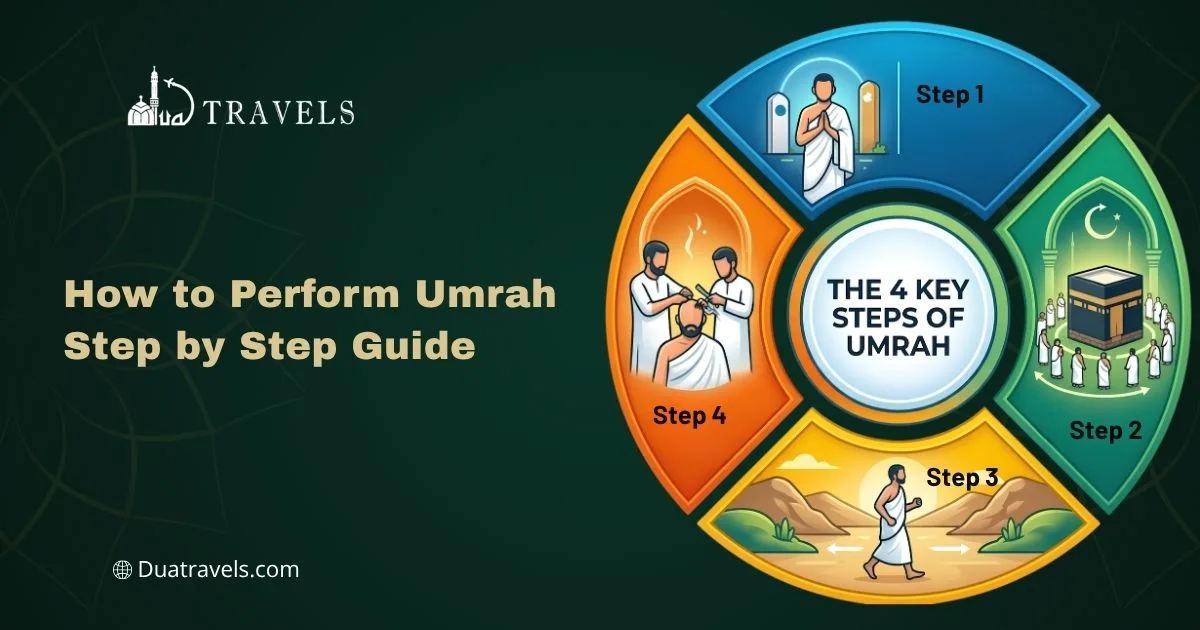
The holy practice of Umrah is considered as a deeply spiritual journey of life where Ummat-e-Muslima can get a chance to connect with Almighty Allah SWT. Umrah can be performed at any time despite waiting for any specific time of the year like Hajj. For Muslims who are situated in the USA, Umrah offers a chance to reconnect with their rituals, faith, and Iman. During this highly spiritual practice, pilgrims seek for forgiveness from the Almighty.
Differences between Umrah and Hajj
There are various pilgrims who get confused between Hajj and Umrah rituals and steps. Understanding these differences can help pilgrims in making suitable travel arrangements. Hajj is a religious duty that must be performed once in a lifetime for Muslims who are able to do so and takes place on specific days of the Islamic calendar month of Dhul-Hijjah. Umrah, on the other hand, is not mandatory as it is a flexible islamic practice to perform. Umrah practice is ideal for those who cannot afford Hajj. The following table is a summary of the key differences to offer a clear comparison,
Feature | Umrah | Hajj |
Obligation | Recommended (Sunnah) | Mandatory once in a lifetime |
Timing | Anytime during the year | Specific days in Dhul-Hijjah |
Duration | A few hours to complete | 5-6 days |
Rituals | Ihram, Tawaf, Sa'i, Haircut | Includes Umrah rituals plus Arafat, Mina, Muzdalifah |
Group Size | Individual or small groups | Millions of pilgrims together |
Eligibility and Requirements
It is important to remember that before you make a booking you must guarantee that you have the basic requirements for leaving for the Umrah performance. The U.S. residents are required to obtain a valid Umrah visa from the Saudi eVisa website or an authorized travel agency like Dua Travels USA and provide evidence of the vaccinations which are mandated by the Saudi authorities. Another important aspect of financial background is that travelers must not be in too much debt to make the trip. Physical fitness is also important, as the rituals include walking and standing for long periods of time. Here are the essentials to have completed before you arrive Saudi Arabia for the religious performance:
Passport with 6 months validity is compulsory
The Saudi Umrah visa (eVisa or agency sponsored) is required for entry.
Saudi health requirements (including meningitis)
Women's accompaniment by Mahram (guardian) in accordance with Saudi regulations
A sufficient budget for travelling, accommodation and daily expenses.
Physical fitness is essential to perform rituals as walking is included
Step 1: Enter the State of Ihram
Ihram is a physical and spiritual step that mainly initiates the Umrah. To proceed by arriving at the specific points designated as Miqat, pilgrims are required to perform ghusl (full body bath), shave their nails and hair in excess. Men wear two unstitched white clothes while women wear modest and loose fitting clothes which cover the body in an appropriate manner without covering the face and hands. After performing the act of ritual clothing, the pilgrim makes the intention (niyyah) for the ritual of Umrah and then recites the Talbiyah prayer which states that the pilgrim is present and devoted to Almighty SWT. This recitation is repeated during the journey to Mecca. It also involves following a set of prohibitions when entering Ihram, including not wearing perfume, not cutting hair or nails, not arguing and not having abandoned relations until the end of the pilgrimage. Reminding oneself of these rules helps to preserve the sacredness of the journey and to make sure that the pilgrim's mind remains on the worship and not on the worldly desires.
Step 2: Perform Tawaf Around the Kaaba
After the stare of Ihram pilgrims enter the Grand Mosque (Masjid al-Haram), and then they perform Tawaf, in which they have to complete a seven times rotation around the Kaaba. The first circuit starts and ends at the Black Stone (Hajar al-Aswad) and pilgrims are encouraged to touch or point towards it (if they cannot reach it because of the crowd). Tawaf is done with sincere supplication and is meant to show unity with all Muslims and devotion to one and only Almighty SWT. Following the seven rounds, the pilgrims proceed to pray two rak'ahs behind the area of Ibrahim (Muqam-e-Ibrahim) (if possible) or in the mosque (if the place is crowded). It takes time and patience as the mosque can be very crowded, particularly during peak periods.
Step 3: Sa'i (Safa and Marwah)
Once Tawaf is completed, the pilgrims then move on to Sa'i, a ritual in which they walk quickly between the hills of Safa and Marwah seven times. This ritual is to remember the story of Hajar R.A who ran, seeking water for her son Ismail, between these two points, and the Well of Zamzam miraculously appeared. The pilgrims start from Safa and finish at Marwah, each pilgrim takes 1 lap at a time and has to complete 7 laps. During this step a phase comes under the green zone where male pilgrims are asked to run faster while female pilgrims remain at the normal speed. This ritual is a strong reminder of faith and trusting in Allah’s providence during difficult times. It is a time for pilgrims to reflect on their lives and pray for guidance and blessings.
Step 4: Complete Halq or Taqsir (Hair Cutting)
This is the last ritual of Umrah, it is the formal completion of the pilgrimage. Men can shave their heads completely (Halq) or they can shave a small portion of their hair (Taqsir), and women usually cut off a small section of hair that is roughly the length of a fingertip. This act is a sign of humility, renewal and letting go of past sins as pilgrims leave the sacred state of Ihram. After this, all Ihram prohibitions are removed and pilgrims can get back to their normal daily activities, such as wearing regular clothes and fragrances. Many tourists reach out for barbershops that are close to the Grand Mosque for this reason. Halq or Taqsir is a sign of spiritual fulfillment, marking the end of the Umrah journey.
What to pack for Umrah?
It is essential to pack wisely that can help you to be comfortable and prepared for the journey. This sacred journey involves walking during the hot climate of Saudi Arabia for which it is essential to pack modestly. . It is also important for travelers from the USA to consider long flights and possible layovers when packing necessities. To make sure that your visit is comfortable during your pilgrimage, you may want to pack the following items:
Ihram Clothing (Men: Two unstitched white cloths, Women: Modest Clothing)
Comfortable footwears
A light prayer mat and personal Quran or Quran app.
Water bottle and electrolyte packets for re-use for hydration.
Basic First-Aid Kit (which contains pain relievers and other basic medicines).
Portable phone charger and international SIM card/eSIM
Passport, visa and vaccination records.
Best Time to Perform Umrah
As Umrah is allowed to be done throughout the year, the timing will depend on individual schedules, budget and preference for crowd size. The month of Ramadan is believed to be spiritually fruitful, but at the same time very crowded and expensive. During cooler weather, like winter, it's easier to walk and stand for long periods of time, mainly for people who are older or have health issues. The best time to travel occurs after considering spiritual needs and practical factors such as budget, comfort, and work or school vacation time at home.
Final Words
Learning about all the essential steps Preparing for Umrah is a great help that one can get through this guide. In addition to the rituals, the services of the trip and preparation are also important for the comfortable journey throughout. You can stay near the Grand Mosque so that it will be easier for you in terms of time and energy between prayers and rituals. Make sure to drink plenty of water, take small rest or breaks, and have reasonable expectations of attendance so you can focus on the spiritual goal of the trip, rather than getting confused in the details. Lastly, travel to the journey with patience, knowing that Umrah is not about perfection, but about connection and gratitude.